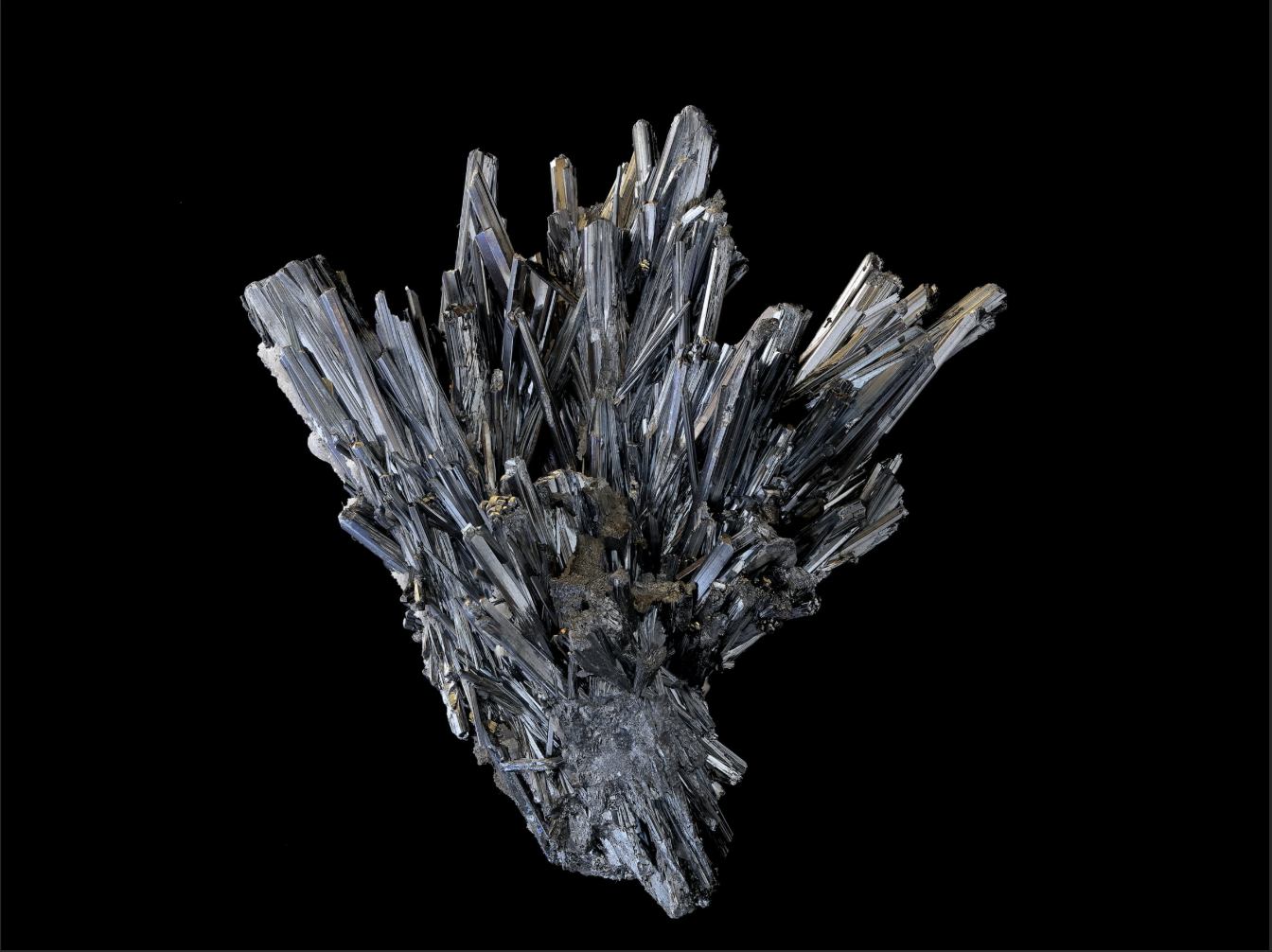
Antimony
What is it?
Antimony is a naturally occurring, silvery-white metal found in the earth's crust.¹˒²˒³ When it gets into your drinking water, it is completely invisible—it has no color, taste, or smell, making it impossible to detect without special tests.²
Where It Comes From in New Mexico
In New Mexico, high levels of antimony in drinking water come from both nature and human activities. Naturally, it can enter groundwater as water washes over rocks and soils.² New Mexico also has a long history of mining, and historical mining areas, such as the Black Hawk district in Grant County and the Chloride district in Sierra County, contain old deposits that can release antimony into the water.⁴˒⁵ Additionally, antimony is widely used in everyday products like flame retardants, plastics, electronics, and metal solder, meaning industrial waste, manufacturing, and even household plumbing can be sources.²˒³˒⁶
Health Concerns
Drinking water with high levels of antimony can be harmful to your health. Short-term exposure to high amounts can cause stomach pain, nausea, vomiting, and diarrhea.¹˒³˒⁸ Drinking contaminated water over a long period of time is even more dangerous, as it can lead to serious heart problems, lung issues, liver damage, increased blood cholesterol, and decreased blood sugar.¹˒³˒⁶
How Climate Change Exacerbates Exposure Risk
Extreme weather events and natural disasters, like wildfires, can severely increase the risk of antimony in drinking water. When a massive fire burns through an area, later rains and floods can wash metal-rich ash and dirt straight into the groundwater.⁷˒⁸ For example, after the massive 2022 Hermits Peak-Calf Canyon Fire, testing showed dramatic spikes of antimony and other heavy metals in private drinking water wells in Mora County, reaching levels considered unsafe by the Environmental Protection Agency (EPA).⁷˒⁸˒¹⁰
How to Prevent Exposure Risk
If you get your water from a private well, it is your responsibility to make sure it is safe, because federal drinking water rules do not apply to private wells.⁶
Look out for signs: Because antimony has no taste, smell, or color, you cannot rely on your senses to know if your water is contaminated.²
Test your water: The only way to know for sure what is in your water is to have it tested by a certified laboratory.⁷˒⁸ Following recent wildfires, the New Mexico Environment Department has offered free well testing for heavy metals for residents in affected areas like Mora, San Miguel, and Taos counties.⁹
Never boil the water: Boiling water will not remove antimony. In fact, boiling simply evaporates the water and leaves the metals behind, making the antimony even more concentrated and dangerous to drink.⁷˒⁸
Filter your water: If your water tests high for antimony, you can install specialized water filters in your home. Systems like whole-house reverse osmosis are highly effective at removing antimony and making your water safe to drink.⁶˒⁸
References
Antimony | ToxFAQs™ | ATSDR - CDC Link: https://wwwn.cdc.gov/TSp/ToxFAQs/ToxFAQsDetails.aspx?faqid=331&toxid=58
Antimony in Drinking Water - New Mexico Environment Department Link: https://service.web.env.nm.gov/urls/EjVmqrWR
Antimony Compounds | EPA Link: https://www.epa.gov/sites/default/files/2016-09/documents/antimony-compounds.pdf
Petrology of "five-element" deposits in the Black Hawk district, Grant County, New Mexico Link: https://www.researchgate.net/publication/377264766_Petrology_of_five-element_deposits_in_the_Black_Hawk_district_Grant_County_New_Mexico
Mineral Belts in Western Sierra County, New Mexico (USGS Bulletin 1876) Link: https://pubs.usgs.gov/bul/1876/report.pdf
Antimony - MSU Extension Water Quality Link: https://waterquality.montana.edu/well-ed/interpreting_results/fs_antimony.html
Heavy Metals in Mora County Water - NM-Tracking Link: https://nmtracking.doh.nm.gov/contentfile/pdf/environment/water/HPCC_FactSheet_2025.pdf
Report finds increased levels of metals in Mora County water - NM Health Link: https://www.nmhealth.org/news/alert/2025/11/?view=2295
Private Well Water Testing for Mora, San Miguel and Taos Counties, NM Link: https://www.env.nm.gov/morasanmigueltaos-pws/
Elevated metals in Mora County water supply - New Mexico Department of Agriculture Link: https://nmdeptag.nmsu.edu/media/pdf/elevated-metals-in-mora-county-water-supply.pdf