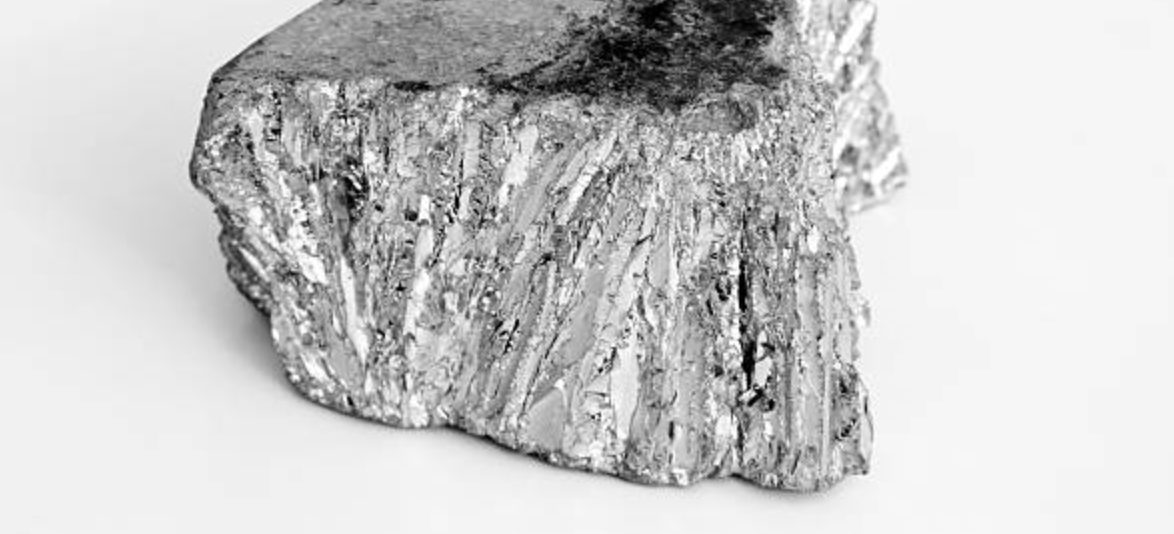
Nickel
What is it?
Nickel is a hard, silvery-white transition metal that is naturally abundant in the Earth's crust.¹˒⁸˒⁹ While it is considered an essential nutrient for certain microorganisms, plants, and animal species, it has no recognized nutritional value for humans and can pose significant health risks when consumed in high amounts.¹
Where It Comes From in New Mexico
In New Mexico, nickel makes its way into groundwater and surface water through a combination of natural and human-made pathways: Nickel is naturally released into the environment and water bodies from the weathering and dissolution of the earth's crust and soil over time.¹ Historically, New Mexico’s industrial landscape has significantly impacted local water supplies. Industrial activities, such as mining and electroplating, can discharge nickel into the environment.¹˒⁸˒⁹ For example, groundwater in the central mining area of the Tyrone open-pit copper mine in Grant County has shown nickel concentrations exceeding state standards by more than 10 times due to extensive leaching operations.² In some rural and tribal areas, nickel levels can vary wildly, as seen in a study of unregulated water sources across the Western Navajo Nation which found that while the median nickel concentration was relatively low (1.09 μg/L), some sources had extreme maximum concentrations reaching up to 560 μg/L.³
Regulations and Safe Drinking Limits
The regulatory framework for heavy metals ensures safety across multiple uses:
Agricultural Standards: The state maintains numeric standards for agricultural use to protect animals. For livestock and horses, the recommended upper safe level of nickel in water is 1 mg/L.⁴
Health Effects of Nickel Exposure
While trace amounts of nickel are difficult to avoid, consuming elevated levels in drinking water can lead to both acute and chronic health issues:
Allergic Dermatitis: The most common adverse health effect of nickel exposure is contact dermatitis.⁸ For the 10% to 20% of the population already sensitized to nickel, often from jewelry or clothing fasteners, drinking water with elevated nickel can trigger "systemic contact dermatitis," causing severe eczema flare-ups across the body.⁵
Internal Organ Stress: Chronic ingestion of soluble nickel salts has been linked to nephrotoxicity, or kidney damage, reproductive issues such as decreased fertility and increased pup mortality observed in animal studies, and neurotoxicity.⁶
Cancer Risk: While inhaling nickel dust in occupational and industrial settings is a well-documented cause of lung and nasal cancer, current toxicological data considers it unlikely that ingesting nickel through drinking water causes cancer in humans.⁸˒¹⁰
How Climate Change Exacerbates Exposure Risk
Uncontrollable climate changes and ongoing environmental degradation significantly increase the risk of heavy metal contamination in our drinking water. In New Mexico and similar arid environments, extreme weather events exacerbate these risks in two primary ways:
Wildfires: Environmental events like wildfires, which are increasing in severity, create urgent challenges for water quality by rapidly altering the landscape and groundwater chemistry. Following massive blazes like New Mexico's 2022 Hermits Peak/Calf Canyon Fire, post-wildfire landscape changes can cause heavy metals to leach directly into the water supply. Additionally, the chemical fire suppressants used to battle these large-scale wildfires frequently contain heavy metals, which can subsequently wash into groundwater and contaminate private wells.⁷
Droughts and Reduced Dilution: Severe drought conditions reduce the natural flow rates of surface water and groundwater catchments. This lack of water eliminates the natural dilution of trace metals, leading to much higher concentrations of contaminants. Furthermore, extreme droughts can force communities to rely on alternative, lower-quality water sources just to meet basic demands. For instance, in one rural town, a severe drought prompted local authorities to supplement the drinking water supply with underground mine water, directly leading to elevated nickel exposure for the public.¹⁰
How to Prevent Exposure Risk
If you rely on a private well, which does not receive the same routine testing and regulatory oversight as municipal water systems, here are the recommended steps for safety:
Test Your Water: The New Mexico Environment Department strongly recommends having your well water tested at a certified laboratory, as this is the only reliable way to know exactly what is in your water.⁷
Do Not Boil Contaminated Water: If testing reveals elevated levels of heavy metals like nickel, boiling your water will not make it safe. Boiling evaporates the water and actually concentrates the harmful metals, making the water more toxic to consume.⁷
Use Safe Alternatives: If your water is contaminated, switch to bottled water for drinking and cooking.⁷ Because nickel is poorly absorbed through intact skin, it is generally safe to continue using the well water for washing hands, doing laundry, and cleaning dishes, though individuals with severe nickel allergies should consult their physician.⁷˒⁹
References
Begum, Wasefa, et al. "A comprehensive review on the sources, essentiality and toxicological profile of nickel." RSC Advances. URL: https://pmc.ncbi.nlm.nih.gov/articles/PMC8985085/
Marshall, Clint. "Testimony of Clint Marshall regarding the Tyrone Mine." Water Quality Control Commission - New Mexico Environment Department. URL: https://www.env.nm.gov/wp-content/uploads/sites/27/2019/10/WCOEx.15.pdf
Credo, Jonathan, et al. "Quantification of Elemental Contaminants in Unregulated Water across Western Navajo Nation." International Journal of Environmental Research and Public Health / PMC. URL: https://pmc.ncbi.nlm.nih.gov/articles/PMC6696199/
"Elevated metals in Mora County water supply." New Mexico Department of Agriculture. URL: https://nmdeptag.nmsu.edu/media/pdf/elevated-metals-in-mora-county-water-supply.pdf
EFSA Panel on Contaminants in the Food Chain. "Update of the risk assessment of nickel in food and drinking water." EFSA Journal / PMC - NIH. URL: https://pmc.ncbi.nlm.nih.gov/articles/PMC7643711/
Haber, L.T., et al. "Hazard Identification and Dose-response of Ingested Nickel Soluble Salts / Assessment of Nickel Soluble Salts – Oral Exposure." URL: https://www.tera.org/Publications/NiOral.pdf
"Report finds increased levels of metals in Mora County water." New Mexico Department of Health / KRQE News 13. URLs: https://www.nmhealth.org/news/alert/2025/11/?view=2295 and https://www.youtube.com/watch?v=HCyGIl8dP6I
"Nickel Compounds." U.S. Environmental Protection Agency (EPA). URL: https://www.epa.gov/sites/default/files/2016-09/documents/nickle-compounds.pdf
"Nickel - ToxGuide." Agency for Toxic Substances and Disease Registry (ATSDR) / CDC Stacks. URL: https://stacks.cdc.gov/view/cdc/46345/cdc_46345_DS1.pdf
Alam, Noore, et al. "Environmental health risk assessment of nickel contamination of drinking water in a country town in NSW." New South Wales Public Health Bulletin / ResearchGate. URL: https://www.researchgate.net/publication/23672234_Environmental_health_risk_assessment_of_nickel_contamination_of_drinking_water_in_a_country_town_in_NSW