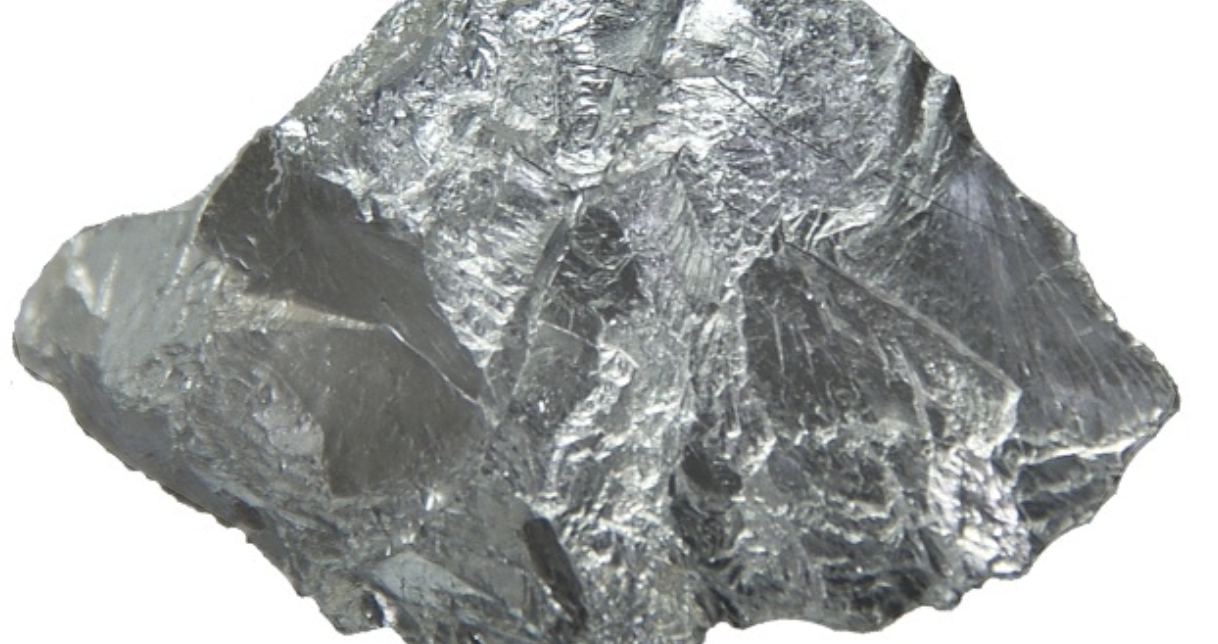
Tungsten
What is it?
Tungsten is a solid, white or gray metal that is found naturally as a trace mineral in rocks and soil.¹ It is widely used to make strong metal alloys, grinding wheels, and as a "green" replacement for lead in bullets.¹ While scientists previously thought tungsten was mostly inactive, recent findings show that it dissolves easily in water and can move rapidly through the environment.¹
Where It Comes From in New Mexico
In New Mexico, tungsten can enter drinking water from both natural geology and human activities. Naturally, tungsten is tied to ancient geological events that concentrated the metal into deposits across the state.² For example, tungsten-bearing minerals are found in areas like Iron Mountain in Sierra County and Copper Mountain in Taos County.³˒⁴ Additionally, New Mexico has historic tungsten mining sites, such as "The Tungsten Mine" in Taos County, which left behind old shafts and prospect pits.⁵ A modern source of tungsten in the environment comes from firing ranges, where the use of tungsten-nylon bullets can introduce the metal into the surrounding soil and water.¹
Health Concerns
The health effects of exposure to tungsten depend on how it enters the body and how long the exposure lasts.¹ Animal studies suggest that ingesting tungsten may cause negative reproductive and developmental effects, and that it can specifically target the kidneys.¹ Breathing in tungsten dust has been linked to lung inflammation and scarring, known as pulmonary fibrosis.¹˒⁶ Furthermore, public health officials have investigated tungsten after it was found in the water of Fallon, Nevada, a town that experienced an unusual cluster of childhood leukemia cases.¹˒⁷
How Climate Change Exacerbates Exposure Risks
Changing weather patterns and a drier climate in the Southwest can directly increase the risk of exposure to tungsten and other harmful heavy metals. As temperatures rise and droughts become more severe, safe surface water becomes scarce, which forces many rural families to rely on unregulated private wells that are more likely to contain contaminated water.¹ Furthermore, the increasingly dry and arid climate creates specific oxidizing soil conditions that make it very easy for tungsten, along with co-occurring toxic metals like uranium and arsenic, to dissolve and move freely through the ground.² Finally, when extreme and infrequent heavy rainstorms do hit, the sudden flood of water can rapidly wash these accumulated metals out of the dry dirt and flush them directly into local groundwater and drinking water supplies.³
How to Prevent Exposure Risks
If you get your drinking water from a private well, it is important to monitor its safety.
Test your water: Because tungsten can be mobile in groundwater, you should have your well tested if you live near historic mining areas or firing ranges.¹ Standardized methods established by federal agencies are used by laboratories to accurately detect tungsten in water.⁸
Filter your water: If testing reveals high levels of tungsten, studies show that it can be removed from water using specialized separation and filtration processes.⁸
References
1. Technical Fact Sheet – Tungsten (U.S. Environmental Protection Agency): https://19january2021snapshot.epa.gov/sites/static/files/2017-10/documents/ffrro_ecfactsheet_tungsten_9-15-17_508.pdf
2. Mining Districts and Prospect Areas in New Mexico (New Mexico Bureau of Geology and Mineral Resources): https://geoinfo.nmt.edu/publications/maps/resource/downloads/24/RM-24_Booklet.pdf
3. Mineral Belts in Western Sierra County, New Mexico (U.S. Geological Survey): https://pubs.usgs.gov/bul/1876/report.pdf
4. The occurrence and crystal structure of foitite from a Tungsten-bearing vein at Copper Mountain, Taos County, New Mexico (ResearchGate): https://www.researchgate.net/publication/47466047_The_occurrence_and_crystal_structure_of_foitite_from_a_Tungsten-bearing_vein_at_Copper_Mountain_Taos_County_New_Mexico
5. The Tungsten Mine (Western Mining History): https://westernmininghistory.com/mine-detail/10009688/
6. Tungsten Issues Paper (Association of State and Territorial Solid Waste Management Officials): https://astswmo.org/files/policies/Federal_Facilities/TUNGSTEN_FINAL_120208.pdf
7. Fallon Nevada: Follow-up: Exposure to Tungsten in Three Nevada Communities (Centers for Disease Control and Prevention): https://archive.cdc.gov/www_cdc_gov/nceh/clusters/fallon/exposurefaq.htm
8. Emerging Contaminant Tungsten (U.S. Environmental Protection Agency): https://nepis.epa.gov/Exe/ZyPURL.cgi?Dockey=P1000L3K.TXT
9. Arsenic and Uranium Contamination on Navajo Nation Tribal Lands, USA: A State-of-the-Science Review of a Toxic Mining Legacy and Its Socio-Environmental Impacts: https://doi.org/10.3390/environments12100394
10. Comprehensive Assessment of Tungsten in New Mexico Hydrosystems: Geochemical Occurrence, Toxicological Implications, and Environmental Fate: https://pmc.ncbi.nlm.nih.gov/articles/PMC8434972/.
11. acid-mine drainage contaminated: Topics by Science.gov: https://www.science.gov/topicpages/a/acid-mine+drainage+contaminated