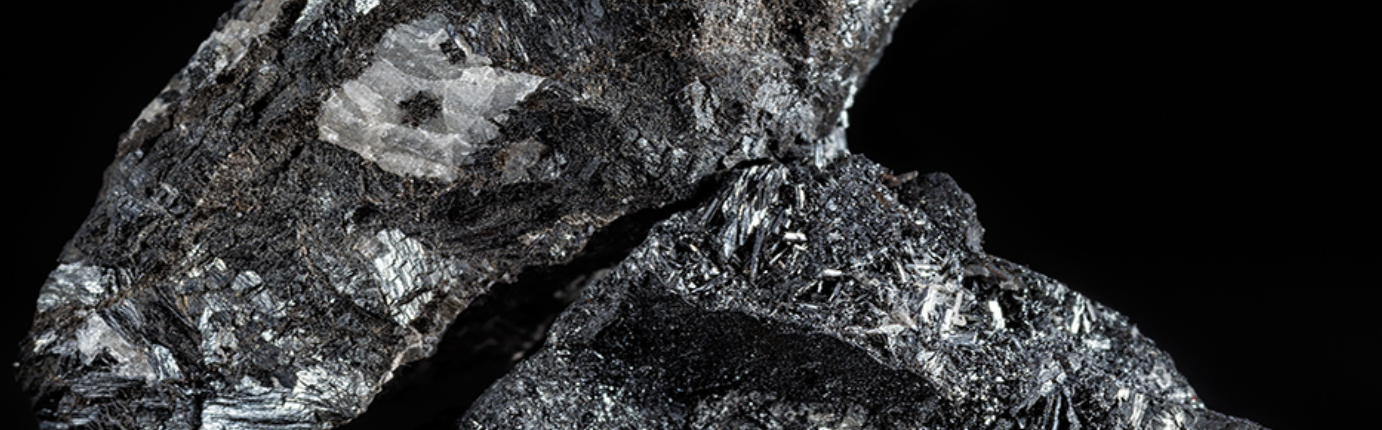
Manganese
What is it?
Manganese is a naturally occurring metal and mineral found everywhere in rocks, dirt, and groundwater.⁴˒⁵˒⁶ Unlike cadmium, a small amount of manganese is actually an essential nutrient that our bodies need for healthy bones and cartilage.¹˒⁵ However, when too much of it gets into our drinking water, it becomes a dangerous toxin that can seriously harm your health.²˒⁶˒⁸
Where It Comes From in New Mexico
In New Mexico, manganese mostly gets into the water by naturally dissolving from the rocks and soil underground.⁴˒⁵ It is found in well water across the state, including the Animas River valley, Mora County, Corrales, and the Albuquerque South Valley.²˒⁶ It can also seep into the environment from human activities, such as pollution from the closed Lee Acres Landfill near Farmington.³
Because the underground water systems in New Mexico are highly complicated, manganese levels can vary wildly from house to house.⁴ This means your private well might have dangerously high levels, while your next-door neighbor's well is perfectly fine.⁴
Health Concerns
Drinking water with high levels of manganese over a long period of time can cause severe damage to your brain and nervous system.⁴˒⁶ Symptoms of manganese poisoning include headaches, memory loss, extreme tiredness, anxiety, and muscle weakness.⁴˒⁶ In severe cases, it can cause movement problems that look very much like Parkinson's disease.⁶
Babies, young children, the elderly, and people with liver problems are at the highest risk.²˒⁶ Babies are particularly vulnerable because their bodies cannot clear out toxins the way adults do.⁸ Because dry baby formula is already fortified with manganese, mixing it with high-manganese tap water can give infants a dangerous overdose.⁸ In children, high exposure is linked to learning problems, attention deficits, and abnormal behavior.²˒⁸
A critical warning: Showering in water with high manganese is incredibly dangerous.⁶ Breathing in the steam from the shower provides a direct pathway for vaporized manganese to enter your brain through your nose.⁶ Because of this, inhaling it in the shower is far more toxic than simply drinking it.⁶
How Climate Change Exacerbates Exposure Risks
Just like with other toxic metals, changing weather patterns and natural disasters can directly increase the risk of manganese in your water:
Wildfires and Floods: When wildfires destroy the landscape, they change how water flows and filters through the ground. For example, testing in Mora County after the massive 2022 Hermit's Peak/Calf Canyon fires showed that by 2025, manganese levels in local water had spiked to nearly double the safe health limit.²
How to Prevent Exposure Risks
If you get your water from a private well in New Mexico, the state does not check your water for you; you are 100% responsible for testing it to make sure it is safe.⁴
Test your well regularly: You should test your well when you move in, every 5 to 10 years, or if your water starts to taste metallic, bitter, or leaves brown or black stains on your sinks and pipes.⁴˒⁵˒⁶ The safety limit for health is 0.3 milligrams per liter (mg/L).⁵˒⁶
Where to get tested and "Water Fairs": You can use certified private labs to test your water. While the state's environmental tracking data does not include specific test results collected publicly from "Water Fairs," the state lists local Private Well Water Test Fairs as a great resource where residents can get help understanding their water quality.⁴
Never boil the water: If you have high manganese, boiling your water will not make it safe.² In fact, boiling evaporates the water, leaving the metal behind and making the poison even more concentrated.²
Filter your whole house: Because breathing in manganese in the shower is so dangerous, small filters under your kitchen sink are not enough.⁶ To protect your family, you should install a certified "whole-house" treatment system, such as a specialized water softener (ion exchange) or an oxidation filter that cleans the water before it reaches your bathrooms.⁶˒⁷
References
Malczewska-Toth, B., Stargel, A., & Krapfl, H. (September 14, 2018). Biomonitoring Studies of Exposure to Selected Metals in New Mexico, 2014-2017. New Mexico Epidemiology Report, Volume 2018, Number 7, New Mexico Department of Health.: www.health.state.nm.us
New Mexico Department of Health / NM-Tracking. Heavy Metals in Mora County Water: drinking.water@env.nm.gov.
Gray, E. L., & Ferguson, C. L. Investigating the source and mobility of manganese in groundwater and sediments on the Lee Acres Landfill near Farmington, NM. U.S. Geological Survey, New Mexico Water Science Center: https://www.usgs.gov/centers/new-mexico-water-science-center
New Mexico EPHT Tracking Public Web site. (Updated November 18, 2025). Manganese. Link: https://nmtracking.doh.nm.gov/
New Mexico Environment Department, Drinking Water Bureau. (December 2025). Manganese in Drinking Water: https://www.env.nm.gov/drinking_water/
Boaz, D. P. Manganese in New Mexico Well Water: What Every Home Owner Should Know. HydraTech of New Mexico.: www.hydratechnm.org
New Mexico EPHT Tracking Public Web site. (Updated October 13, 2022). Private Well Water Treatment. Link: https://nmtracking.doh.nm.gov/
Schmidt, C. W. (2021). Manganese intake in babies: Drinking water plus formula can cause high exposures. Environmental Health Perspectives, 129(7), 074002. https://doi.org/10.1289/EHP9786